
tiandi@tiandicn.com / lab-glassware@tiandicn.com
+86-515-88631536 / +86 13912566435
+ 86 19551521639
Tiandilabware
Product features
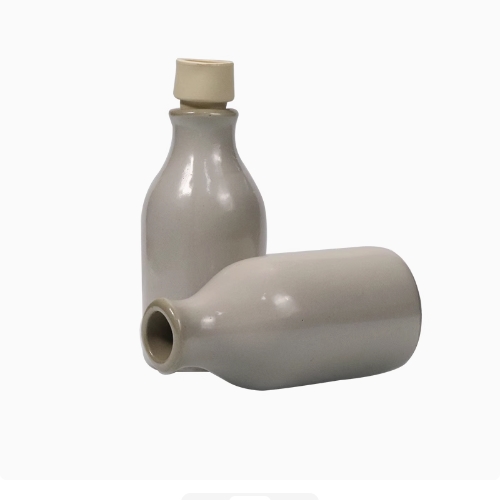
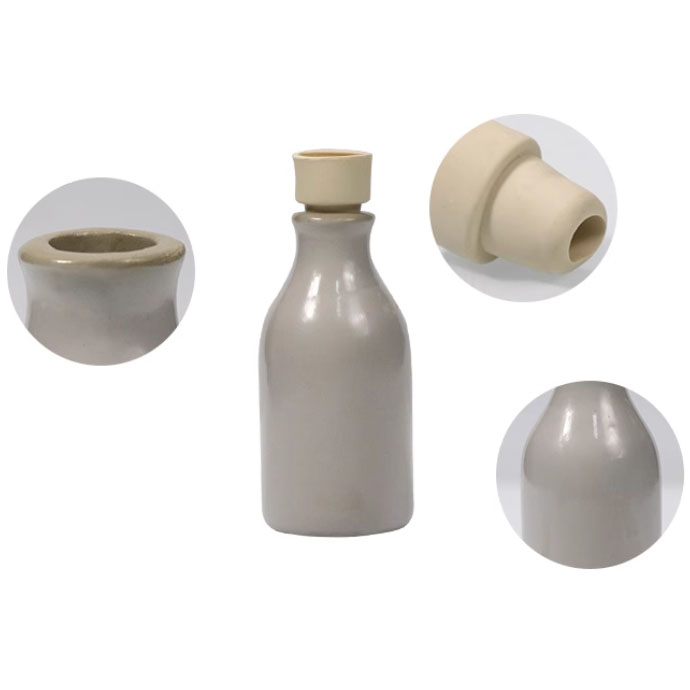
(1) Strong chemical stability: Ceramic materials are not easy to react chemically with mercury, which can ensure the stability of the chemical properties of mercury and avoid the interaction between the container and mercury affecting the experimental results or causing mercury to deteriorate.
(2) Good sealing: The equipped ceramic bottle stopper can fit tightly to the bottle mouth, effectively preventing the volatilization of mercury, reducing the diffusion of mercury vapor in the laboratory air, and reducing the harm to the environment and human health.
(3) Excellent high temperature resistance: It can withstand high temperatures and is not easily deformed or damaged by common temperature changes in the laboratory. It can be used stably in experimental environments with different temperature conditions.
(4) Good insulation performance: The insulation properties of ceramics can prevent safety accidents caused by problems such as static electricity accumulation, ensuring safe use in electrical experiments.
(5) High mechanical strength: Compared with ordinary glass containers, ceramic mercury bottles have better mechanical strength and can withstand a certain degree of collision and impact, reducing the risk of container breakage and mercury leakage due to accidents.
(6) Easy to clean: The ceramic surface is smooth and not easy to absorb mercury. It is easy to clean and can effectively prevent mercury residues from interfering with subsequent experiments.
Product applications
(1) Storage of mercury: Ceramic mercury falsks have good sealing properties and chemical stability, which can effectively prevent mercury from volatilizing and reacting with other substances. Therefore, they are ideal containers for storing mercury in the laboratory.
(2) Quantitative use: In some experiments that require the use of mercury, such as some chemical analysis experiments and physical property testing experiments, a certain amount of mercury needs to be accurately measured.
(3) Special experimental reactions: In some specific chemical reactions, mercury participates in the reaction as a reactant or catalyst. Ceramic mercury bottles can be used as part of the reaction container to transfer mercury to the reaction system.
(4) Teaching demonstration: In the teaching of chemistry, materials science and other related majors, it is often necessary to show students the properties of mercury and related experimental operations.
- Previous:
- Next: